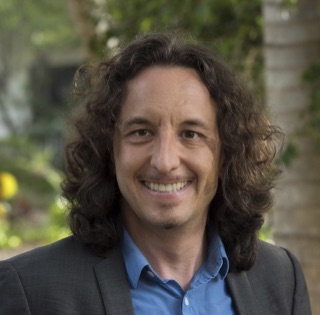
Nicolas Menicucci
Professor of Theoretical Physics
ARC Future Fellow
RMIT University · Melbourne, Australia
(pronounced "ker-mit”)
Welcome to the QuRMIT Theory Lab. At RMIT University, in Melbourne, Australia, we study quantum physics through the lens of information: how it is represented and manipulated and what an observer can measure or infer. The work is curiosity-driven, with an eye to technological implications. Mathematical structure and toy models help us explore questions beyond a particular implementation.

What information can a physical system carry? Which operations and measurements are available to an observer? We use these questions to connect the four areas below. Individual projects often belong to more than one.

We study the structure of quantum information in finite-dimensional and continuous-variable systems. Our questions concern encodings, subsystem decompositions, and the information available through a given set of measurements. A change of representation can reveal connections between these descriptions.
For example, our work with the Zak transform describes a GKP-encoded qubit within a continuous-variable system by separating logical information from a remaining gauge subsystem. Wavelet decompositions of fields resolve correlations by position and scale. Our work uses mutual information to construct metrics in free-field models, including Euclidean geometries.
We study continuous-variable quantum computing architectures, error-correcting codes, and protocols, with a substantial body of earlier work on continuous-variable cluster states. Our questions concern how quantum encodings, entangled resources, and measurements fit together. Optics is a major setting, but our interests extend to the mathematical structure of encodings and to playful models such as quantum Rubik’s cubes.
In measurement-based computation, an entangled resource is prepared first. Measurements then enact gates on the information encoded in that resource. With continuous-variable systems, such as optical fields, qubits can be encoded in degrees of freedom that are themselves continuous.
Mathematical structure matters alongside physical implementation; fault-tolerant operation depends on the encoding, resource quality, and noise model. Optics is a major setting for this work, rather than a limit on the questions we pursue.
Our quantum Rubik’s-cube work explores quantum moves and interference through a software simulation and quantum-circuit constructions.
We study how relativity and the resources available to an observer shape their account of physics. Our work includes entanglement harvesting from quantum fields, descriptions of fields at different resolutions, and sonic relativity. Classical acoustic models let us ask what observers would infer if they built their clocks and rulers using sound, including when some signals travel faster than sound.
Relativity changes the setting in which observers exchange and measure quantum information. Our work in relativistic quantum information has included entanglement harvesting: transferring entanglement from a quantum field to local detectors. Current interests include descriptions of fields that make measurement resolution and correlations at different scales explicit.
Sonic relativity gives us another way to examine the observer’s role. What account of relativity would observers develop if they built their clocks and rulers using sound? Some of these models are classical, but they help us distinguish the medium’s description from what an observer can infer within it.
In our tachyonic-media models, faster-than-sound signals can appear tachyonic to sonic observers without producing the usual causal paradox. The signals propagate in a medium with a preferred rest frame. The result concerns those propagation rules, rather than fundamental faster-than-light particles.
When a familiar argument seems to rule something out, we ask which assumptions do the work. Our discrete Wigner-function research examines which restrictions follow from basic validity conditions and which require additional properties. Constructing and comparing representations helps us distinguish a limitation of a particular description from a limitation of the physics.
We have constructed and related valid representations for finite-dimensional systems, including even dimensions. Recent work characterizes the parameter spaces of a specified covariant family and separates basic validity from additional requirements on marginals and displacement operators. That distinction lets us ask precisely what a non-existence claim rules out.
A selection of recent papers.


Alumni roles describe their last position in the group.
Professor of Theoretical Physics
ARC Future Fellow
PhD Student
PhD Student
PhD Student
Research Assistant
Undergraduate Research Student
Undergraduate Research Student

Former role: Postdoctoral Researcher
Former role: Postdoctoral Researcher
Former role: JSPS Overseas Research Fellow
Former role: PhD Student
Former role: PhD Student
Former role: Honours Student
Former role: Vice Chancellor's Postdoctoral Fellow
Former role: Postdoctoral Researcher
Former role: Postdoctoral Researcher
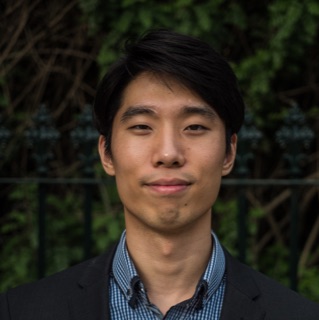
Former role: Masters Student
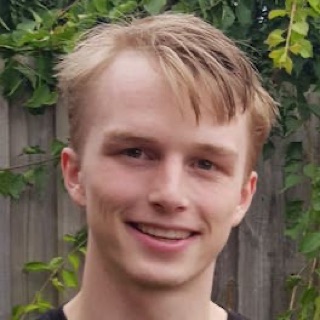
Former role: Undergraduate Research Student
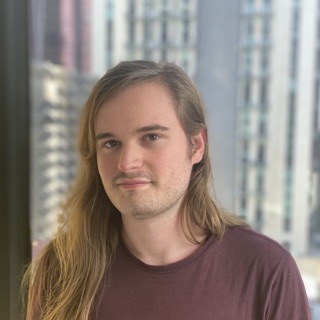
Former role: Honours Student

Former role: Visiting PhD Student
Former role: Undergraduate Research Student
We teach and mentor students and postdocs, helping them develop scientific judgment, communication skills, and independence as researchers. Learning to formulate a worthwhile question and explain the answer is part of doing the research. We also train them to use frontier AI models without outsourcing their learning. What we delegate changes with the task and what each researcher needs to learn.
Completing a task and learning from it are distinct goals. A first paper may call for writing without AI; a later one may use AI to reorganise material. Depending on what needs to be learned, we work independently, use AI for hints, or delegate and check. An expert learning a new technique may need hands-on practice too.
Research in this archive has received support from the organisations below.
Contact us with questions about the research, ideas for collaboration, or enquiries about joining the lab.


